



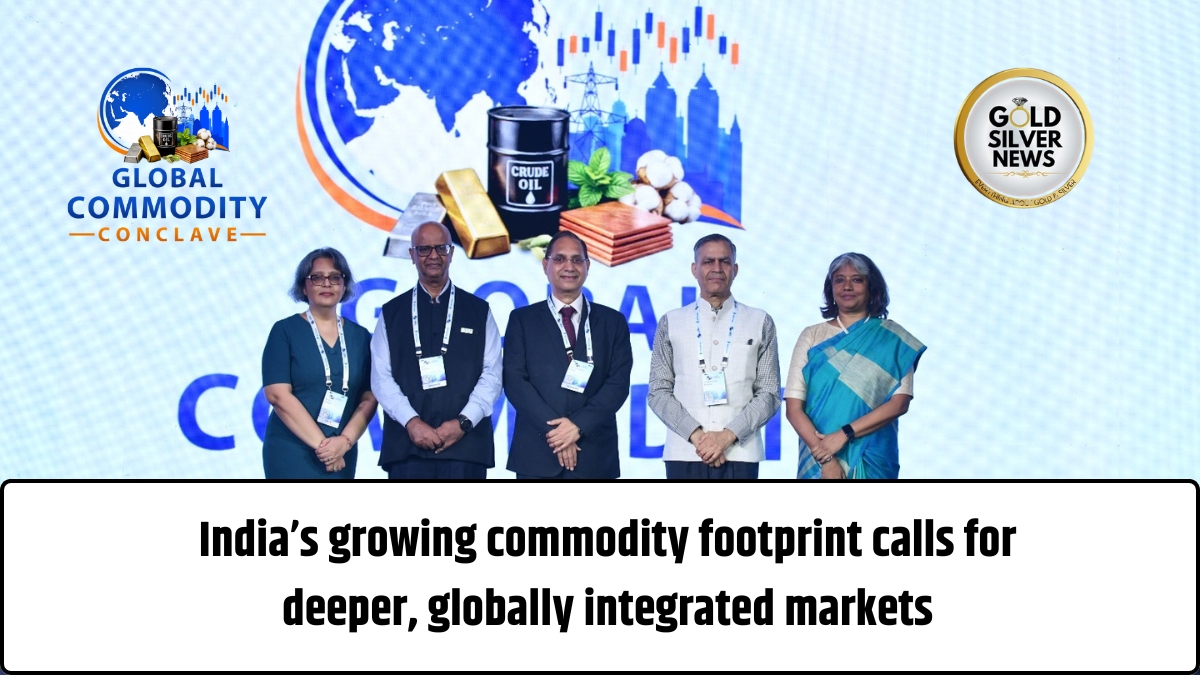
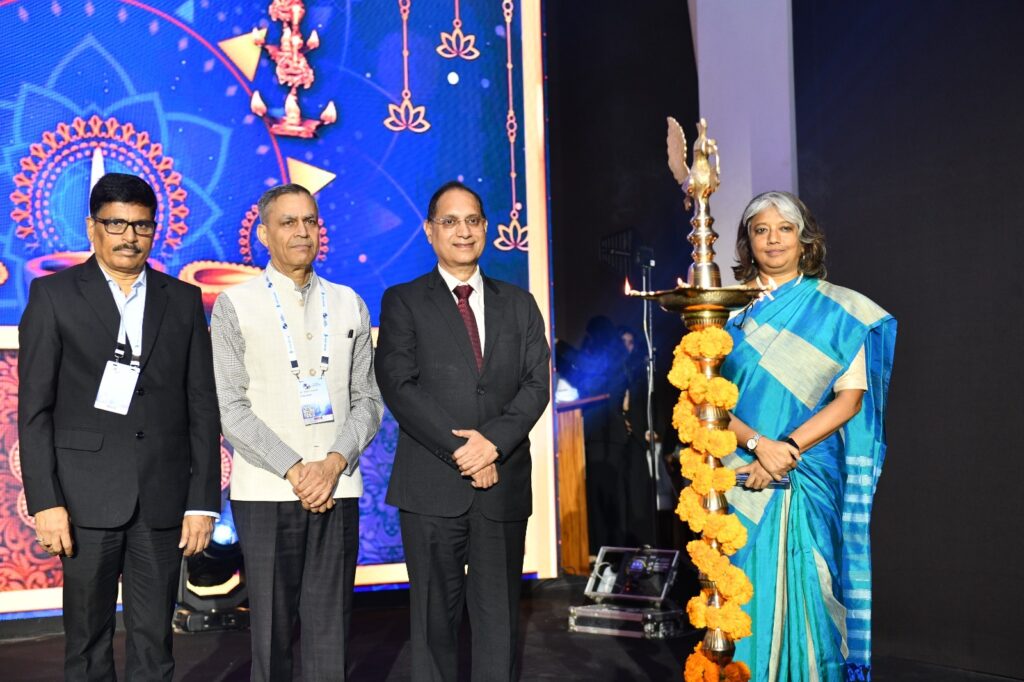
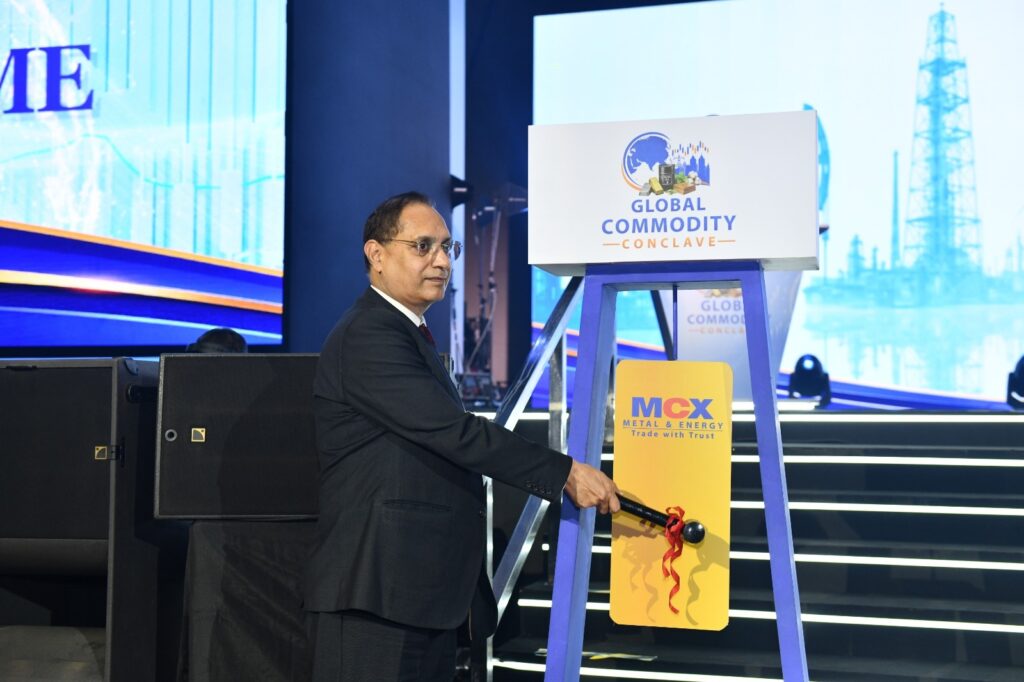
The Global Commodity Conclave (GCC) 2026 inaugurated in Mumbai at the Jio World Convention Centre on August 12, with a strong focus on strengthening India’s domestic commodity markets, improving price discovery and connecting the country more closely with global commodity markets. The Conclave being held from August 12–14, 2026.
Check out the latest Gold, Silver prices in MCX, International Market, Sarafa and your city on our new website– https://goldpricetodaynews.com/
The opening session was led by Shri Tuhin Kanta Pandey, Chairman, Securities and Exchange Board of India. K Rajaraman, Chairman, IFSCA, Harsh Kumar Bhanwala, Chairman, Multi Commodity Exchange, along with domestic and international industry participants, were present at the event.
The three-day conclave, supported by the Multi Commodity Exchange of India (MCX), will continue through August 14. Its central theme is “Convergence of Physical and Financial Markets.”
India’s Growing Commodity Role Calls for Deeper Markets
India’s expanding position as both a major commodity producer and consumer is increasing the need for stronger domestic markets, better price-risk management and closer integration with international markets.
Ms. Praveena Rai, MD & CEO, MCX, said in her opening address at the Global Commodity Conclave:
“India’s importance as a critical producer and consumer of commodities is creating a need for deeper domestic commodity markets, better price-risk management and closer integration with global markets.”
India’s commodity economy is estimated at roughly Rs 50 lakh crore, or approximately USD 600 billion, based on the value of production and imports. However, the country’s commodity market-to-GDP ratio is around 3.1, which remains below levels seen in mature markets.
India’s expanding commodity footprint covers both production and consumption. The country is a leading producer of steel, aluminium, coal and cotton, while it is also a major consumer of gold and crude oil.
This exposure makes India vulnerable to international commodity price movements, but it also creates an opportunity to develop stronger domestic mechanisms for managing such risks.
“The opportunity is hence two-sided,” Rai said. “Protecting from price volatility while also providing an opportunity to participate in these markets.”
Price Discovery, Currency Risk and Rupee Hedging in Focus
Improving domestic price discovery and establishing stronger links with global markets are expected to remain key themes throughout GCC 2026.
The programme includes discussions on Indian commodity benchmarks, price discovery, currency risk management and rupee hedging.
The presence of major international exchanges, including CME and LME, alongside Indian exchanges, regulators, industry organisations, producers and consumers, highlights the conclave’s focus on greater global integration.
“Global integration is a key message of the conclave,” Rai said.
The event brings together participants from across the commodity ecosystem to examine how India can develop more efficient markets while strengthening its ability to manage international price and currency risks.
GCC 2026 Covers Bullion, Base Metals, Energy and Agriculture
Under the theme “Convergence of Physical and Financial Markets,” GCC 2026 features dedicated tracks covering a broad range of commodity and financial market segments.
The programme includes sessions on:
- Bullion
- Base metals
- Energy
- Agri-commodities
- Coal
- Capital markets
- Technology
- Retail participation
- Climate risk
The conclave will run through August 14, with the programme concluding on Day 3 with a dedicated retail segment and closing address.
Commodity Insights Yearbook 2026 Released at GCC 2026
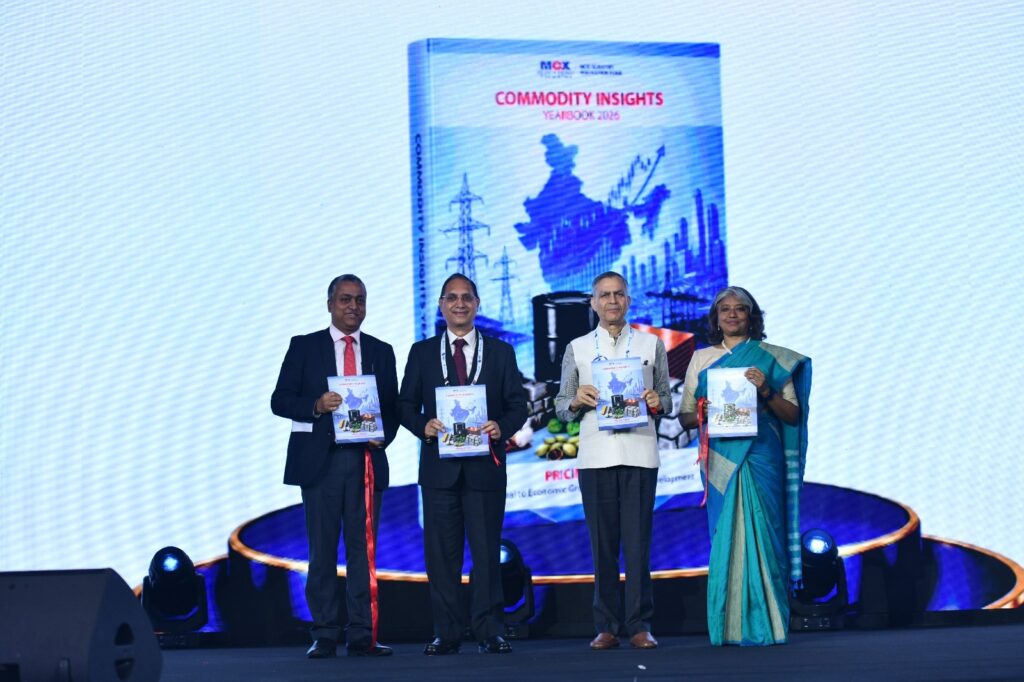
The opening day of the Global Commodity Conclave also saw the release of the Commodity Insights Yearbook 2026, which examines India’s potential transition from a price-taker to a price-setter in global commodity markets.
The Yearbook argues that India’s biggest challenge in commodity markets is not the scale of its production or consumption, but its limited pricing power.
Released under the theme “Pricing in India: Central to Economic Growth and Market Development,” the publication brings together views from economists, market practitioners, industry leaders and subject-matter experts.
Contributors and participating institutions include KPMG, S&P Global Energy, Regsus and Metal Intelligence Centre, Alpha Alternatives, DSP Asset Managers, Aadishakti Group, Bandhan AMC, Exide Industries, IIM Calcutta, St. Xavier’s University Kolkata, Quesrow Research & Strategy Co., Comm’fident and CRU Group.
The Yearbook contains 13 contributions examining benchmark formation and the development of pricing across gold, steel, base metals, metal recycling, energy and agricultural commodities. It also includes an extensive statistical section.
Credible Price Discovery Seen as Key to Economic Growth
In the preface to the Yearbook, Praveena Rai, MD & CEO, Multi Commodity Exchange of India Ltd. (MCX), places credible price discovery at the centre of India’s economic development.
She writes that as India advances towards Viksit Bharat 2047, the strength of its markets will be as important as the scale of its production and consumption. Prices, she notes, are signals that guide investment, resource allocation and production decisions, making an efficient and credible pricing ecosystem essential to sustained economic growth, competitive markets and long-term resilience.
The Yearbook therefore emphasises that the development of transparent and reliable pricing mechanisms can play an important role in India’s economic expansion.
India Has Opportunity to Build Stronger Domestic Commodity Markets
The Commodity Insights Yearbook 2026 highlights the opportunity for India to develop deeper domestic commodity markets that more accurately reflect the country’s own economic fundamentals.
Such markets could also help India increase its influence over global commodity pricing as its production, consumption and trade continue to grow.
The Yearbook identifies market institutions, infrastructure, broad-based participation and a trusted regulatory environment as important components for creating transparent, credible and efficient pricing mechanisms.
The report’s broader objective is to encourage India to move beyond simply accepting prices established by international markets and instead develop a greater role in global price discovery.
India’s Domestic Prices Could Gain Greater Regional Importance
The growing scale of India’s commodity production, consumption and international trade makes domestic pricing increasingly important for businesses, producers, consumers and other market participants.
The Yearbook suggests that domestic prices are likely to become more significant indicators for Indian stakeholders as the country’s commodity ecosystem develops.
Over time, stronger domestic pricing mechanisms could also have a greater influence on regional trade decisions across Asia, strengthening India’s position within the wider Asian commodity market.
GCC 2026 and Yearbook Share a Common Objective
The discussions at the Global Commodity Conclave and the findings of the Commodity Insights Yearbook 2026 point towards a common objective: building deeper, more transparent and globally connected commodity markets in India.
While GCC 2026 is focusing on practical issues such as benchmarks, price discovery, currency risk, rupee hedging and global integration, the Yearbook examines the longer-term importance of pricing power for India’s economic development.
Together, the conclave and the Yearbook highlight India’s growing commodity footprint and the opportunity to strengthen the country’s role from a market participant that largely responds to global prices to one that can increasingly contribute to global commodity price discovery and regional pricing decisions.
FAQs
1. What is the Global Commodity Conclave 2026?
The Global Commodity Conclave 2026 is a three-day commodity market event being held in Mumbai from August 12 to August 14, 2026, under the theme “Convergence of Physical and Financial Markets.”
2. What did Praveena Rai say about India’s commodity market?
Praveena Rai, MD & CEO, MCX, said India needs deeper domestic commodity markets, better price-risk management and closer integration with global markets as its importance as a commodity producer and consumer increases.
3. What is the estimated size of India’s commodity market?
According to the information presented at GCC 2026, India’s commodity market is worth roughly ₹50 lakh crore, or approximately USD 600 billion, based on the value of production and imports.
4. What is the Commodity Insights Yearbook 2026 about?
The Commodity Insights Yearbook 2026 examines India’s commodity pricing ecosystem and its potential transition from a price-taker to a price-setter. It contains 13 contributions covering gold, steel, base metals, metal recycling, energy and agricultural commodities, along with a statistical section.
5. Which topics and commodity sectors are covered at GCC 2026?
GCC 2026 includes dedicated tracks on bullion, base metals, energy, agri-commodities, coal and capital markets, along with sessions covering Indian commodity benchmarks, price discovery, currency risk management, rupee hedging, technology, retail participation and climate risk.
Gold Price Today Digital Media Network
Facebook Page (129K Followers)- https://www.facebook.com/Goldsilverpricetoday
Facebook group of (80K Jewellers Member – Sunar Jewellers Ekta – https://www.facebook.com/groups/goldsilverpricenews
Website (100000 Users)- https://ohq.plp.mybluehostin.me/
Instagram (51K Followers)- https://www.instagram.com/goldpricetodaynews/
X- https://twitter.com/today_gold
Telegram Group (2000 Members)- https://telegram.me/goldsilverprice
Magazine (20000 Digital Subscribers): Gold Silver News For Magazine Subscription Contact +919111435279
Whatsapp News(25000 Members): +91844846958