

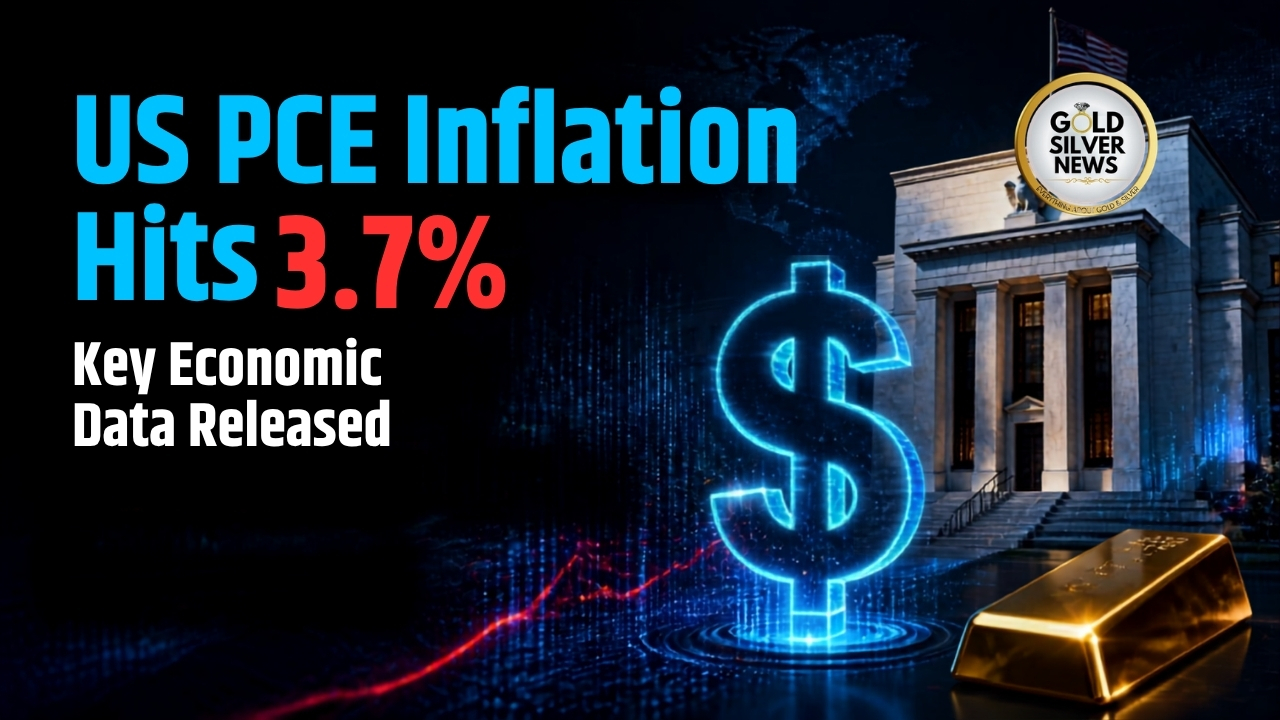
The latest US economic data has delivered a mixed picture for investors, with inflation remaining elevated while economic growth continued at a moderate pace. The Personal Consumption Expenditures (PCE) Price Index rose 3.7% year over year in July, while the second estimate showed real US GDP expanded at a 1.5% annualized rate in Q2 2026.
Check out the latest Gold, Silver prices in MCX, International Market, Sarafa and your city on our new website– https://goldpricetodaynews.com/
US PCE Inflation Rises 3.7% in July
According to the latest data from the US Bureau of Economic Analysis (BEA), the PCE price index increased 3.7% in July from a year earlier. The monthly PCE price index rose 0.2%, following a 0.1% decline in June.
The core PCE price index, which excludes food and energy prices and is closely monitored by the Federal Reserve, also increased 0.2% month over month. On an annual basis, core PCE inflation stood at 3.3% in July.
The latest inflation figures remain significantly above the Federal Reserve’s 2% inflation objective, keeping price pressures firmly on the radar of policymakers.
US PCE Inflation: Key Numbers
- Headline PCE inflation: 3.7% year over year in July
- Core PCE inflation: 3.3% year over year
- Headline PCE monthly increase: 0.2%
- Core PCE monthly increase: 0.2%
- Real PCE: Increased by less than 0.1% in July on a monthly basis
US Personal Income Rises in July
The BEA also reported a notable increase in household income during July.
Personal income increased by 115.1 billion US dollars, or 0.4%, while disposable personal income climbed 125.9 billion US dollars, or 0.5%. Personal consumption expenditures increased 36.3 billion US dollars, or 0.2%, during the month.
Personal outlays increased by 36.6 billion US dollars. Meanwhile, personal saving reached 712 billion US dollars, with the personal saving rate standing at 3.0%.
The rise in personal income was primarily driven by higher compensation, government social benefits and income received from assets.
Services Spending Increases While Goods Spending Falls
The increase in current-dollar PCE was largely driven by stronger spending on services.
Spending on services increased by 86.2 billion US dollars, while spending on goods declined by 49.9 billion US dollars. This indicates that services continued to provide the main support to consumer spending during July.
Real PCE increased by only 1.3 billion US dollars, equivalent to less than 0.1% on a monthly basis.
US GDP Growth Holds at 1.5% in Q2 2026
The second major release showed that real US GDP increased at an annualized rate of 1.5% in the second quarter of 2026, unchanged from the advance estimate. The economy had expanded 2.1% in the first quarter.
The second-quarter expansion was supported by increases in consumer spending, exports and investment, although these gains were partly offset by weaker government spending. Imports also increased.
The latest figures therefore point to a moderation in economic growth compared with Q1, while consumer demand remained an important source of support.
Consumer Spending Remains a Key Growth Driver
One notable revision in the second GDP estimate was stronger consumer activity.
Real final sales to private domestic purchasers increased 4.2% in Q2, compared with 3.9% in the advance estimate. This measure combines consumer spending and gross private fixed investment and was revised upward by 0.3 percentage point.
The acceleration in consumer spending partly offset slower investment, exports and government expenditure compared with the previous quarter.
Q2 2026 GDP: Important Figures
- Real GDP Growth: 1.5%
- Current-Dollar GDP Growth: 8.0%
- Real Final Sales to Private Domestic Purchasers: 4.2%
- Real GDI Growth: 2.2%
- Average of Real GDP and Real GDI: 1.8%
- Gross Domestic Purchases Price Index: 5.8%
- PCE Price Index: 5.3%
- Core PCE Price Index: 3.6%
GDP Price Pressures Remain Elevated
The second-quarter data also highlighted continued price pressure across the economy. The price index for gross domestic purchases increased 5.8% in Q2, up from the 5.7% advance estimate. The quarterly PCE price index was revised to 5.3%, while the PCE price index excluding food and energy was revised to 3.6%.
These figures underline that inflationary pressures remained significant even as real economic growth moderated.
Real GDI and Corporate Profits Improve
Real gross domestic income (GDI) increased 2.2% in Q2, compared with 1.2% in Q1. The average of real GDP and real GDI rose 1.8%, compared with 1.7% in the first quarter.
Corporate profits also showed a sharp improvement. Profits from current production increased by 400.9 billion US dollars in Q2, compared with a 74.4 billion US dollar increase in Q1.
What the PCE and GDP Data Mean for the Federal Reserve
The latest numbers present the Federal Reserve with a complicated policy environment.
On one hand, headline PCE inflation at 3.7% and core PCE at 3.3% remain above the Fed’s 2% objective. On the other hand, GDP growth has slowed from 2.1% in Q1 to 1.5% in Q2.
The combination means policymakers must balance persistent inflation against a moderating growth environment. The core PCE measure is particularly important because the Federal Reserve closely watches it when assessing underlying inflation trends.
Market Outlook: Gold, Dollar and Interest Rates in Focus
The latest inflation and GDP numbers could influence expectations surrounding US monetary policy, Treasury yields and the US dollar.
For gold investors, elevated inflation can remain an important factor because it affects expectations for interest rates and real yields. A prolonged period of restrictive monetary policy can weigh on non-yielding assets such as gold, while expectations for eventual policy easing can provide support.
The combination of 3.7% headline PCE inflation, 3.3% core PCE inflation and 1.5% GDP growth will therefore be closely watched by financial markets as investors reassess the Federal Reserve’s next steps.
What Will Be the Impact on Gold and Silver Prices in India?
The latest US inflation and GDP figures could have a significant impact on the outlook for gold and silver prices in India. With US PCE inflation remaining above the Federal Reserve’s 2% target while economic growth moderated in Q2, investors are likely to closely track interest-rate expectations, the US dollar, Treasury yields and the Indian rupee.
Gold Prices in India May Remain Volatile
Gold prices in India could remain sensitive to movements in international bullion markets following the latest US economic data. Persistent inflation may reduce expectations of aggressive Federal Reserve rate cuts, potentially limiting gold’s upside in the short term.
However, slower US economic growth could strengthen expectations that monetary policy may eventually become less restrictive. Such expectations could support international gold prices and, in turn, benefit domestic gold prices.
Fed Rate Expectations to Remain a Key Driver
The combination of 3.7% headline PCE inflation and 3.3% core PCE inflation suggests that US price pressures remain elevated. This could make the Federal Reserve cautious about easing interest rates quickly.
Higher interest rates and yields generally create pressure on non-yielding assets such as gold. On the other hand, growing expectations of future rate cuts could improve investor demand for precious metals.
Rupee Movement Could Influence Indian Gold Prices
For Indian buyers, the movement of the rupee against the US dollar will be an important factor. Since international gold prices are quoted in the US currency, a weaker rupee can increase the domestic cost of imported gold.
Therefore, even if international gold prices remain broadly stable, depreciation in the rupee could provide upward support to gold prices in India.
Silver Prices Could Experience Greater Volatility
Silver may react differently from gold because of its strong industrial component. The moderation in US GDP growth to 1.5% in Q2 2026 could raise concerns about economic activity and industrial demand.
At the same time, stronger consumer spending and resilient private domestic demand could provide some support to the broader economic outlook. As a result, silver prices may experience greater two-way movement as investors assess both industrial demand and monetary-policy expectations.
Gold Could Benefit From Safe-Haven Demand
Despite elevated interest rates, gold could continue to attract safe-haven demand if investors remain concerned about inflation, economic uncertainty or financial-market volatility.
If expectations of slower economic growth begin to outweigh concerns about persistent inflation, gold could receive additional support from expectations of eventual monetary easing.
Silver May Need Stronger Industrial Demand for a Sustained Rally
For silver to maintain a strong upward trend, investment demand alone may not be sufficient. Industrial consumption remains an important component of the silver market.
A resilient global economy could support industrial demand, while signs of a sharper slowdown could create pressure. This makes silver potentially more volatile than gold in response to changing economic expectations.
International Gold Prices and the Rupee Will Be Crucial
The direction of gold prices in India will ultimately depend on a combination of global and domestic factors. International gold prices, the US dollar, the Indian rupee, import costs and local demand will all play a role.
A rise in global gold prices combined with a weaker rupee could result in a stronger increase in domestic gold prices.
FAQs
1. What was the US PCE inflation rate in July 2026?
The US headline PCE price index increased 3.7% year over year in July 2026. On a monthly basis, the index rose 0.2%. The reading shows that inflation remained well above the Federal Reserve’s 2% objective.
2. What was the core PCE inflation rate in July 2026?
Core PCE inflation, which excludes food and energy prices, increased 3.3% from a year earlier in July. The index also rose 0.2% on a monthly basis. The core measure is closely monitored by the Federal Reserve for assessing underlying inflation.
3. How much did the US economy grow in Q2 2026?
Real US GDP increased at an annualized rate of 1.5% in the second quarter of 2026. The figure was unchanged from the advance estimate but represented a slowdown from the 2.1% growth recorded in the first quarter.
4. What supported US GDP growth in Q2 2026?
The second-quarter expansion was supported by consumer spending, exports and investment. These gains were partly offset by a decline in government spending, while imports increased. Real final sales to private domestic purchasers rose 4.2% during the quarter.
5. Why are the PCE and GDP reports important for gold and financial markets?
PCE inflation is an important indicator for assessing the Federal Reserve’s monetary-policy outlook, while GDP provides insight into economic growth. Together, the reports can influence expectations for interest rates, Treasury yields and the US dollar, potentially affecting gold and other financial assets.
Gold Price Today Digital Media Network
Facebook Page (129K Followers)- https://www.facebook.com/Goldsilverpricetoday
Facebook group of (80K Jewellers Member – Sunar Jewellers Ekta – https://www.facebook.com/groups/goldsilverpricenews
Website (100000 Users)- https://ohq.plp.mybluehostin.me/
Instagram (51K Followers)- https://www.instagram.com/goldpricetodaynews/
X- https://twitter.com/today_gold
Telegram Group (2000 Members)- https://telegram.me/goldsilverprice
Magazine (20000 Digital Subscribers): Gold Silver News For Magazine Subscription Contact +919111435279
Whatsapp News(25000 Members): +918448469588