

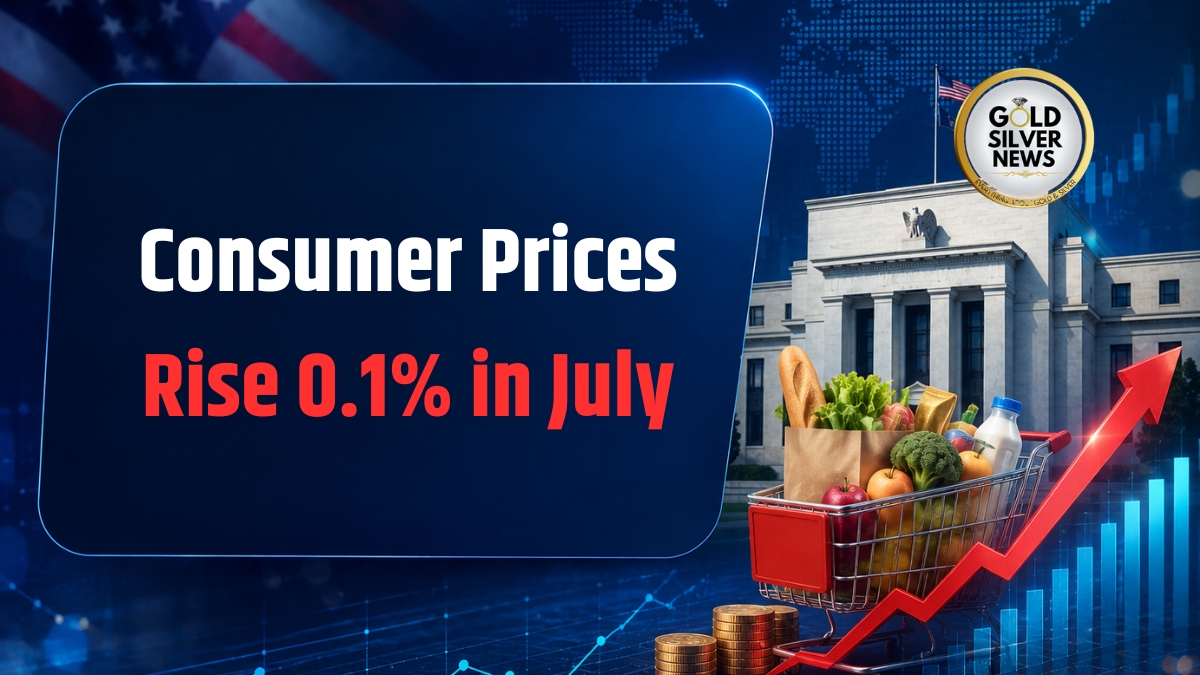
US CPI Inflation Report: U.S. consumer prices increased modestly in July, with headline inflation rising 0.1% month-on-month, in line with market expectations. The latest data suggests that inflation pressures may be cooling, potentially reducing the urgency for the Federal Reserve to raise interest rates at its September policy meeting.
Check out the latest Gold, Silver prices in MCX, International Market, Sarafa and your city on our new website– https://goldpricetodaynews.com/
According to the latest Consumer Price Index (CPI) data from the U.S. Bureau of Labor Statistics, the headline CPI increased 0.1% in July on a seasonally adjusted basis.
Core CPI, which excludes food and energy prices, increased 0.2% during the month. Both readings matched the consensus forecasts.
U.S. Annual Inflation Rate Falls to 3.4%
On an annual basis, headline CPI inflation stood at 3.4% in July, down from 3.5% in June. Core inflation also moderated, declining to 2.5% from 2.6% in June.
Although both measures remain above the Federal Reserve’s 2% inflation target, the moderate monthly increases indicate that the inflation surge seen earlier in the year may be losing some momentum.
The latest data also follows a similarly subdued inflation reading in June, strengthening expectations that price pressures may be gradually stabilising.
July CPI Reduces Expectations for Immediate Fed Rate Hike
The latest inflation report has reduced expectations for an imminent Federal Reserve interest-rate increase. Markets had previously been assigning a relatively high probability to a rate hike at the September Federal Open Market Committee meeting. However, weaker labour-market data and moderating inflation have changed that outlook.
Following the CPI release, traders reduced the probability of a September rate hike to around 42%, according to the CME Group’s FedWatch gauge.
Markets are now increasingly looking toward a potential rate move later in the year, particularly in October or December.
Energy Prices Fall 1.5% in July
Energy prices provided an important offset to other components of the inflation report. The energy index declined 1.5% in July, following a 5.7% monthly drop in June.
However, energy prices remained significantly higher compared with a year earlier, with the category showing a 14.7% annual increase.
The sharp increase in energy costs earlier in the year had contributed significantly to inflation pressures. The latest monthly declines suggest that some of that pressure is now easing, although geopolitical developments remain a potential source of volatility.
Shelter Remains a Major Inflation Driver
Shelter costs continued to play a significant role in keeping inflation elevated. The shelter index increased 0.1% in July, with the category accounting for approximately two-thirds of the overall monthly increase in headline CPI, according to the Bureau of Labor Statistics. The measure tracking what property owners could potentially receive in rent increased 0.3%.
However, the overall shelter increase was partly offset by a sharp 2.8% decline in lodging-away-from-home costs.
Shelter remains one of the most closely watched components of the inflation report because persistent increases in housing-related costs have contributed to inflation remaining above the Federal Reserve’s target.
Food Prices Also Increase 0.1%
Food prices rose 0.1% in July, matching the increase recorded in the shelter category. While the monthly increase was relatively modest, food prices remain an important consideration for consumers and policymakers because persistent gains can influence broader inflation expectations.
The latest CPI report therefore presents a mixed picture, with some categories showing limited price increases while energy prices continued to decline.
Used Cars, Medical Care and Airfares Rise
Several other categories recorded notable increases during July. New vehicle prices increased 0.1%, while prices for used cars and trucks climbed 0.4%. Medical care costs increased 0.4%, adding to inflation pressure in the services sector.
Airfares recorded a more substantial increase, rising 2.2% during the month. These increases show that inflation remains uneven across different parts of the U.S. economy even as the overall monthly CPI increase remained relatively mild.
Fed Has More Inflation Data Before September Meeting
The Federal Reserve will have additional economic data to assess before its next policy meeting in September. The Federal Open Market Committee does not meet again until September, giving policymakers another month of inflation and labour-market data before making their next interest-rate decision.
The latest CPI report therefore does not completely remove the possibility of a September rate hike, but it makes an immediate move less urgent.
Labour Market Weakness Also Changes Rate Outlook
The inflation report comes shortly after renewed concerns about the U.S. labour market. A net decline in employment during July, combined with the recent moderation in inflation and changes in energy prices, has reduced the pressure on the Fed to tighten monetary policy immediately.
At its July meeting, the FOMC voted 9-3 to keep the benchmark interest rate unchanged. The three dissenting policymakers favoured a rate increase.
The latest economic data, however, has shifted market expectations toward a more cautious approach.
Markets Expect Greater Chance of Fed Move Later in 2026
With the September rate hike increasingly uncertain, investors are now assigning greater importance to the October and December policy meetings.
The Fed’s decision will depend on how inflation, employment, consumer spending and other economic indicators develop over the coming weeks.
The July CPI data provides some relief to markets because it did not show a fresh acceleration in consumer prices. However, inflation remains above the Fed’s target, meaning policymakers are unlikely to declare victory yet.
What July CPI Means for Gold Prices
The softer-than-feared inflation data could also have implications for gold prices. Moderating inflation can reduce expectations for aggressive monetary tightening, while lower Treasury yields and a weaker U.S. dollar can provide additional support to gold.
For precious-metals investors, the next key focus will therefore remain on Federal Reserve expectations, Treasury yields, the U.S. dollar and upcoming U.S. economic data.
If inflation continues to moderate and the Fed adopts a less hawkish stance, the environment could remain supportive for gold. However, a renewed rise in inflation could quickly change market expectations.
FAQs
1. What was the U.S. CPI inflation rate in July 2026?
The U.S. Consumer Price Index increased 0.1% month-on-month in July 2026, matching market expectations. On an annual basis, headline inflation eased to 3.4% from 3.5% in June. Core CPI, which excludes food and energy, increased 0.2% during the month, with annual core inflation falling to 2.5%.
2. How did the July CPI report affect expectations for a September Fed rate hike?
The July CPI report reduced expectations for an immediate Federal Reserve rate increase because inflation remained relatively moderate. After the data was released, the market-implied probability of a September rate hike fell to around 42%. Investors are increasingly considering October or December as more likely windows for a potential rate move.
3. Which parts of the U.S. economy contributed most to July inflation?
Shelter remained one of the biggest contributors to July’s inflation increase, accounting for roughly two-thirds of the monthly rise in headline CPI. Food and shelter prices each increased 0.1%, while medical care rose 0.4%, used vehicles increased 0.4% and airline fares jumped 2.2%. Falling energy prices helped offset some of these increases.
4. Why is the July CPI report important for the Federal Reserve?
The CPI report is an important indicator of consumer price pressures and therefore plays a major role in Federal Reserve policy decisions. Although inflation remains above the Fed’s 2% target, the moderate July increase reduces the urgency for additional tightening. Policymakers will also consider upcoming employment and inflation data before the September meeting.
5. What could the July CPI data mean for gold prices?
Moderating U.S. inflation could be supportive for gold if it leads markets to expect a less restrictive Federal Reserve policy. Lower rate expectations can put downward pressure on Treasury yields and the U.S. dollar, both of which can benefit gold. However, a renewed acceleration in inflation could reverse this trend by increasing expectations for tighter monetary policy.
Gold Price Today Digital Media Network
Facebook Page (129K Followers)- https://www.facebook.com/Goldsilverpricetoday
Facebook group of (80K Jewellers Member – Sunar Jewellers Ekta – https://www.facebook.com/groups/goldsilverpricenews
Website (100000 Users)- https://ohq.plp.mybluehostin.me/
Instagram (51K Followers)- https://www.instagram.com/goldpricetodaynews/
X- https://twitter.com/today_gold
Telegram Group (2000 Members)- https://telegram.me/goldsilverprice
Magazine (20000 Digital Subscribers): Gold Silver News For Magazine Subscription Contact +919111435279
Whatsapp News(25000 Members): +91844846958