



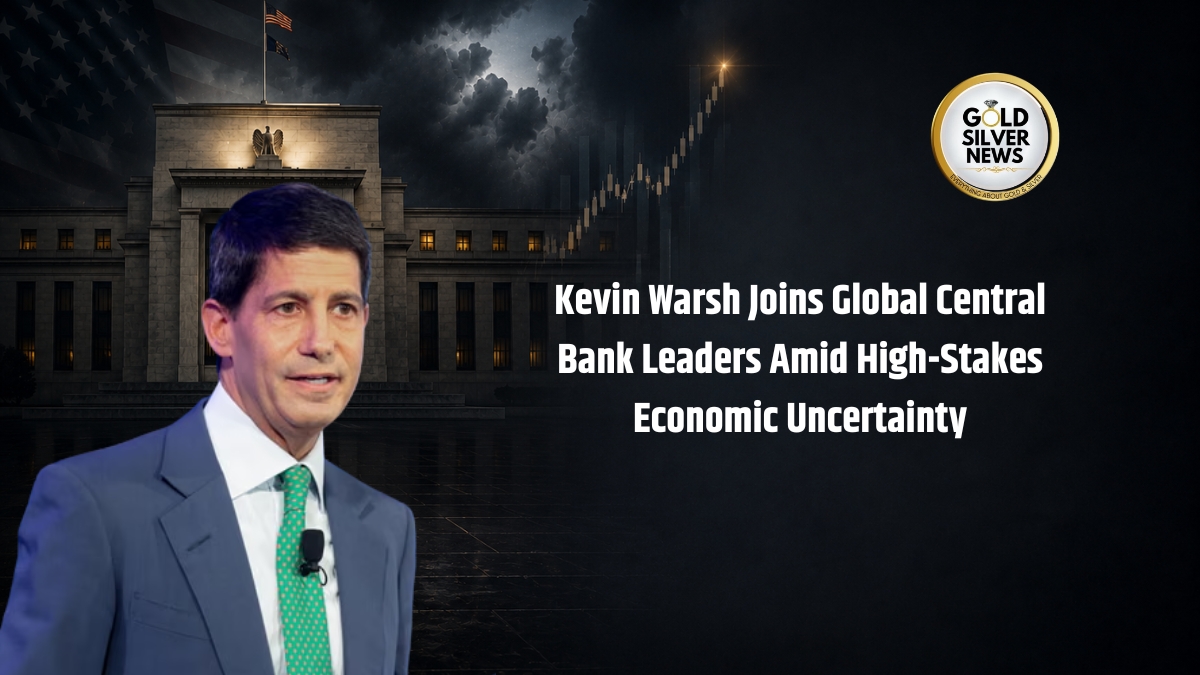
As the global financial architecture navigates a complex matrix of geopolitical tensions and evolving economic landscapes, central banking leadership undergoes its most significant scrutiny in years. In a highly anticipated international debut, newly appointed U.S. Federal Reserve Chairman Kevin Warsh has officially joined global monetary policy peers at the annual European Central Bank (ECB) Forum on Central Banking in Sintra, Portugal. Taking the stage alongside ECB President Christine Lagarde, Bank of England Governor Andrew Bailey, and Bank of Canada Governor Tiff Macklem, Warsh faces an immediate, high-profile test following his recent bold institutional maneuvers, including the complete removal of traditional forward guidance on the U.S. interest rate outlook amidst a fiercely defended battle over central bank independence.
Macroeconomic Stance: Inflation Risks and Policy Independence
Addressing the forum on critical macroeconomic pressures, Fed Chair Warsh delivered clear assertions regarding the domestic price outlook and the operational boundary of the central bank:
- Declining Inflation Risks: Warsh stated that inflation expectations and inflation risks have noticeably come down in recent weeks. However, he strongly reiterated the Federal Reserve’s unwavering commitment to achieving its statutory 2% goal.
- Price Stability Guarantee: Targeting market skeptics, Warsh noted, “If there were people in households or the business sector, in the financial markets, who thought that this central bank was going to be comfortable with an inflation objective above 2%, well, I guess they’d be disappointed: We’re going to deliver price stability in the U.S.”
- Defending Central Bank Autonomy: When challenged by the session moderator, CNBC anchor Sara Eisen, regarding the explicitly stated interest rate views of President Donald Trump, Warsh emphasized institutional continuity, declaring, “We’ve been an independent central bank for a very long time. We’re going to be an independent central bank at this moment, and you’re going to see no changes on that.”
The AI Capital Boom: Inflationary Asset or Supply Catalyst?
The high-level policy panel shifted focus onto the sweeping commercial integration of artificial intelligence (AI) and its structural impact on macroeconomic data.
Warsh noted that in the United States, the AI shock is leading to a prominent boom in front-end capital expenditures, primarily observable on the demand side. While remaining guarded on whether the tech boom is structurally inflationary, Warsh remarked that it remains the central bank’s prerogative to make that ultimate judgment.
He stated a strong preference for this localized capital expenditure surge over historical periods of financial engineering and corporate stock buybacks, expressing confidence that the heavy investments will eventually expand the supply side of the economy, carrying massive implications for future monetary policy.
Global Alignment: The Death of Forward Guidance
A notable point of strategic unity emerged during the panel session regarding the utility of steering financial markets via predictive policy signaling:
- Lagarde’s Regret: ECB President Christine Lagarde openly expressed a core regret regarding her tenure, stating she felt overly bound and compelled by rigid forward guidance in the past. Consequently, the ECB has shifted away from providing fixed paths for future rate moves.
- Warsh’s Clean Break: Chair Warsh, who completely renounced forward guidance during his debut June press conference, welcomed Lagarde’s alignment, stating, “So we have found common cause. It’s what President Lagarde said… After that answer, I love her,” drawing laughter from the Sintra audience.
The Peer Perspective
The global central banking cohort presented a mixed look at domestic data landscapes while reflecting on past structural support networks:
Bank of England Economic Outlook: Bank of England Governor Andrew Bailey clarified that near-term rate cuts are currently off the table for the United Kingdom. Bailey highlighted that the BoE is observing a softening domestic economy, characterized by a loosening labor market, slower activity metrics, and an opening output gap that materialized well before the recent outbreak of hostilities in the Gulf region.
The Powell Solidarity Legacy: The panel noted significant historical context: Warsh’s fellow panellists—Lagarde, Bailey, and Macklem—were all primary signatories to an unprecedented joint solidarity statement issued earlier this year backing former Fed Chair Jerome Powell during intense independence disputes with the Trump administration.
Underlying Legal and Policy Backdrop
The high-visibility Sintra gathering follows critical domestic developments affecting the Federal Reserve’s administrative core:
- Supreme Court Decision on Governor Lisa Cook: The event comes just two days after the U.S. Supreme Court blocked President Trump’s bid to remove Fed Governor Lisa Cook in a 5-4 ruling. Chief Justice John Roberts noted that the administration failed to afford Cook required statutory procedural protections.
- The June Fed Policy Baseline: At his debut policy meeting chaired on June 17, 2026, Warsh maintained U.S. benchmark borrowing costs steady in the 3.50%–3.75% range. Projections indicate nine of 19 policymakers still anticipate a necessary rate hike later this year to counter sticky inflation tracking above the 2% target.
FAQ’s
1. What was the significance of Kevin Warsh’s appearance at the ECB Forum?
Kevin Warsh made his first international appearance as U.S. Federal Reserve Chairman at the ECB Forum in Sintra, Portugal, joining leading central bankers to discuss inflation, interest rates, central bank independence, and the global economic outlook.
2. What did Kevin Warsh say about inflation and the Federal Reserve’s policy?
Warsh stated that inflation risks have eased in recent weeks but emphasized that the Federal Reserve remains fully committed to restoring inflation to its statutory 2% target and will not tolerate a higher long-term inflation objective.
3. How did Kevin Warsh respond to questions about Federal Reserve independence?
Warsh strongly defended the Federal Reserve’s independence, saying the institution has operated independently for decades and will continue to make monetary policy decisions without political influence despite public comments from President Donald Trump.
4. What were Kevin Warsh’s views on artificial intelligence and the economy?
Warsh said the AI boom is driving significant capital investment in the U.S. economy. He believes these investments could eventually expand productive capacity, improve supply conditions, and influence future monetary policy, although their inflationary impact remains uncertain.
5. What is the Federal Reserve’s current interest-rate outlook?
Following its June 17, 2026 policy meeting, the Federal Reserve kept benchmark interest rates unchanged at 3.50%–3.75%. However, projections show that several policymakers still expect at least one additional rate hike later this year if inflation remains above the 2% target.
Gold Price Today Digital Media Network
Facebook Page (129K Followers)- https://www.facebook.com/Goldsilverpricetoday
Facebook group of (80K Jewellers Member – Sunar Jewellers Ekta – https://www.facebook.com/groups/goldsilverpricenews
Website (100000 Users)- https://ohq.plp.mybluehostin.me/
Instagram (51K Followers)- https://www.instagram.com/goldpricetodaynews/
X- https://twitter.com/today_gold
Telegram Group (2000 Members)- https://telegram.me/goldsilverprice
Magazine (20000 Digital Subscribers): Gold Silver News For Magazine Subscription Contact +919111435279
Whatsapp News(25000 Members): +918448469588