

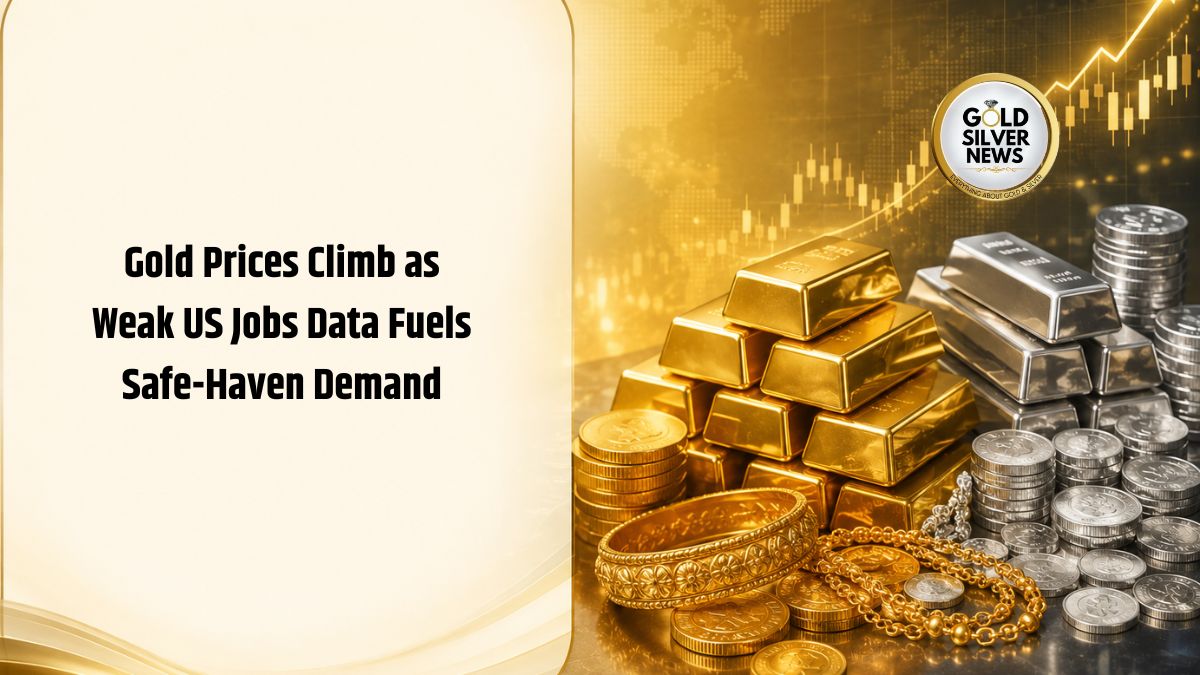
The global commodities market is witnessing an influential shift in momentum as safe-haven assets respond to cooling macroeconomic indicators out of the West. Gold prices rose significantly on Thursday as softer-than-expected U.S. private jobs data and declining crude oil prices collectively eased long-standing inflation concerns among global traders. This macro shift has pushed spot gold up 1.1% to 4,074.65 dollar per ounce, following a robust rebound from a seven-month low in the previous session. With the market intensely focusing on the upcoming official U.S. nonfarm payrolls report to gauge the Federal Reserve’s future interest rate trajectory, bullion has solidified its position at the center of global trade discovery.
Labor Market Realities: Lower ADP Private Payrolls Push Bullion Higher
The immediate catalyst behind gold’s sudden price surge stems directly from cooling metrics inside the U.S. employment sector:
- The June Private Payroll Miss: Data revealed that U.S. private employment expanded by only 98,000 jobs in June. This came in substantially lower than the 1,18,000 job additions economists had widely projected.
- Rapid Downside Rejection: According to Nicholas Frappell, global head of institutional markets at ABC Refinery, the market has shown a distinct reluctance to short the metal at current base levels, with recent downside price probes being rapidly rejected by buyers.
- The Nonfarm Connection: The lower-than-anticipated ADP employment figures have driven speculations that similar cooling trends will be heavily reflected in the upcoming official labor registry data.
The Oil Factor and Inflation Mechanics
A parallel cooling mechanism across the broader commodities index has further aided bullion’s intraday performance. Crude oil prices trended lower following the conclusion of a round of indirect technical talks between Iran and the United States in Doha on Wednesday.
While the talks focused heavily on ensuring the safe flow of international shipping through the crucial Strait of Hormuz, they yielded minimal progress toward a permanent geopolitical peace deal. However, the subsequent reduction in oil prices has successfully subdued immediate inflationary panics.
Market Insight: While bullion is traditionally utilized by institutions as a structural hedge against rising inflation, it historically loses its financial appeal when central banks enforce high interest-rate environments to cool the economy.
Central Bank Stance: Federal Reserve Policy Under Scrutiny
The macro narrative continues to revolve around the administrative goals of the U.S. Federal Reserve, particularly under its new leadership:
- Warsh on Inflation Risk: Federal Reserve Chairman Kevin Warsh noted on Wednesday that inflation expectations and structural inflation risks have visibly decreased in recent weeks. Nonetheless, he reaffirmed the central bank’s steadfast commitment to anchoring inflation back to its formal 2% target.
- Interest Rate Expectations: Traders are currently pricing in an estimated 66% probability of an official interest rate hike occurring in September 2026, according to metrics tracked by the CME FedWatch tool.
- The Upcoming Catalyst: The critical June nonfarm payrolls report, scheduled for release at 1230 GMT, is expected to heavily shape institutional expectations regarding the exact timeline and scope of the Fed’s monetary tightening path.
FAQ’s
1. Why did gold prices rise sharply on July 2, 2026?
Gold prices gained after U.S. private payroll data came in below market expectations, signaling a cooling labor market. At the same time, declining crude oil prices reduced inflation concerns, increasing demand for gold as a safe-haven asset.
2. How did the weak U.S. jobs data influence the gold market?
The ADP report showed only 98,000 private-sector jobs were added in June versus expectations of 118,000. The weaker employment data strengthened expectations that economic growth is slowing, making gold more attractive to investors.
3. Why are falling crude oil prices supportive for gold?
Lower crude oil prices help ease inflationary pressures and reduce uncertainty in global markets. Combined with weaker economic data, this has encouraged investors to shift capital toward safe-haven assets like gold while reassessing future monetary policy.
4. What role does the upcoming U.S. nonfarm payrolls report play for gold prices?
The official nonfarm payrolls report is expected to be a major market-moving event. Investors will use the data to evaluate the strength of the U.S. labor market and assess whether the Federal Reserve is likely to maintain or adjust its interest-rate policy.
5. What is the Federal Reserve’s current policy outlook according to the report?
Federal Reserve Chairman Kevin Warsh reiterated the central bank’s commitment to achieving its 2% inflation target, while noting that inflation risks have eased. Meanwhile, traders are pricing in a 66% probability of a September 2026 interest-rate hike, making upcoming economic data critical for future policy expectations.
Gold Price Today Digital Media Network
Facebook Page (129K Followers)- https://www.facebook.com/Goldsilverpricetoday
Facebook group of (80K Jewellers Member – Sunar Jewellers Ekta – https://www.facebook.com/groups/goldsilverpricenews
Website (100000 Users)- https://ohq.plp.mybluehostin.me/
Instagram (51K Followers)- https://www.instagram.com/goldpricetodaynews/
X- https://twitter.com/today_gold
Telegram Group (2000 Members)- https://telegram.me/goldsilverprice
Magazine (20000 Digital Subscribers): Gold Silver News For Magazine Subscription Contact +919111435279
Whatsapp News(25000 Members): +918448469588