


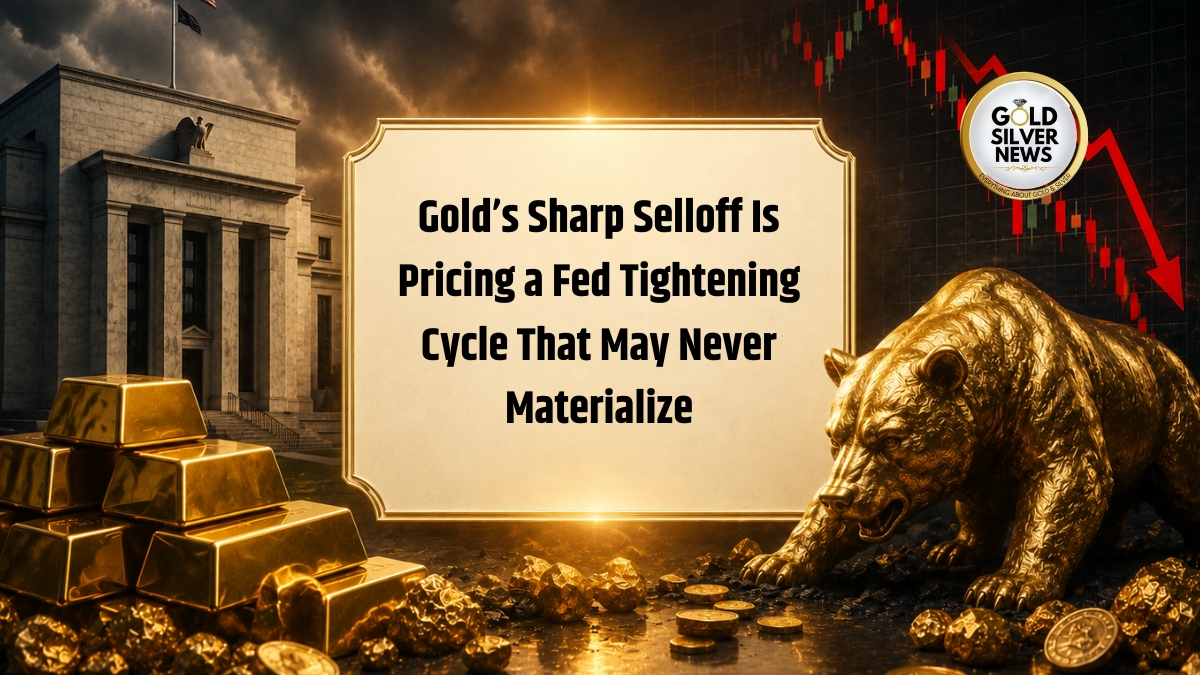
The global bullion market is experiencing a fierce reality check, but the underlying narrative driving the bears might be built on an economic illusion. The precious metal is being heavily penalized by a hawkish market narrative. While investors aggressively reprice gold against a looming Federal Reserve tightening cycle, a deeper look at economic realities suggests the central bank may never actually execute the aggressive hikes the market is currently fearing.
The Near-Term Turbulence: Gold Dragged Through Hawkish Boot Camp
Gold has spent the past month facing immense pressure, breaking below the crucial 4,000 Dollar per ounce mark this week for the first time since November. This extends a bruising retreat from January’s historic peak of 5,595 Dollar.
Current Market Pressures:
- The Catalysts: A climbing US dollar, rising real yields, and core PCE acceleration have combined to create an uncomfortable backdrop for bullion.
- The Fed’s Position: Fed Chairman Kevin Warsh has made it clear that the central bank is determined to maintain its inflation-fighting credentials.
- The Holding Pattern: Because a non-yielding asset rarely thrives when real rates are priced higher, gold remains vulnerable. The 3,850 dollar to 4,100 dollar range is expected to remain a near-term holding pattern rather than a launchpad until the dollar loses altitude.
Softening Physical Demand and the Burden of Opportunity Cost
The near-term fundamental picture is further complicated by a temporary slowdown in traditional physical buying hubs:
- China: Physical demand has softened, heavily weighed down by the nation’s ongoing property malaise.
- India: Buyers are facing the additional drag of higher import taxes.
- The Dollar Effect: A stronger US dollar has made dollar-priced bullion significantly more expensive for non-US buyers, leaving gold to carry a high opportunity cost just as traditional physical bids become less reliable.
Why the Market’s Aggressive Hike Narrative Could Be Wrong
The prevailing trade has become straightforward: Warsh talks tough, inflation remains sticky, and therefore markets assume the Fed must hike rates. However, this conclusion assumes the US economy can absorb sustained tightening without severe consequences.
1. Macroeconomic Headwinds for the Fed
The market may be treating the Fed’s capacity to hike too casually. Further tightening risks running into:
- A softening consumer.
- An incredibly capex-heavy corporate growth model heavily reliant on AI spending.
- Fiscal support that is highly likely to fade into next year.
2. Distorted Inflation Data
While headline and core inflation measures remain sticky due to lingering tariff effects and energy impulses distorting monthly comparisons, underlying data tells a different story. Trimmed-mean and market-based inflation measures—which Chairman Warsh watches closely—remain far less alarming than the broader headline narrative suggests. These pressures are expected to fade as the initial shocks work their way through the system.
The Turning Point: What Gold Needs to Recover
Gold does not require an immediate rate-cut cycle to launch a recovery. Instead, it simply needs the market to begin questioning whether a rate hike is actually a realistic destination along the curve.
The Pivot Point: If oil prices normalize and tariff distortions fade, the Fed may maintain a hawkish rhetorical posture while quietly losing the structural evidence required to deliver an actual tightening campaign. Once rate expectations stop rising, the crowded long-dollar trade becomes highly vulnerable.
The Structural and Institutional Case for Gold Remains Intact
Despite short-term “fast money” repricing the Fed, the long-term structural case for gold has not changed.
Central Bank Diversification (Strategic Demand)
Official-sector demand does not trade on next month’s inflation print. Central banks are acting as a patient, strategic buyer beneath the market due to:
- Geopolitical risks and fragmented global politics.
- Rising debt-sustainability concerns.
- A growing desire to diversify away from excessive US dollar concentration.
According to the World Gold Council’s latest survey, a large majority of central-bank respondents expect global gold reserves to increase over the coming year, with a meaningful share planning to add directly to their own holdings. This institutional demand is structural, not tactical.
While it is too early to declare the current correction completely finished—as gold still requires definitive evidence that the rate-hike narrative has lost traction—the landscape is shifting. For underallocated investors, the market is presenting a highly interesting entry point: exposure to a Federal Reserve tightening story that may prove far easier for policymakers to talk about than to actually execute. The runway is slowly clearing as the market realizes the Fed may never fully walk its hawkish talk.
FAQ’s
1. Why has gold fallen below 4,000 dollar per ounce?
Gold has declined due to a stronger U.S. dollar, rising real bond yields, persistent inflation concerns, and market expectations that the Federal Reserve could continue tightening monetary policy, reducing demand for non-yielding assets like gold.
2. Why do some analysts believe the Fed may not deliver aggressive rate hikes?
Analysts argue that slowing consumer spending, heavy corporate investment needs, fading fiscal support, and easing underlying inflation could make it difficult for the Federal Reserve to sustain an aggressive rate-hiking cycle.
3. What could help gold prices recover?
Gold could rebound if investors begin to believe that additional Fed rate hikes are unlikely. A weaker U.S. dollar, moderating inflation pressures, lower oil prices, and improving market sentiment would also support higher gold prices.
4. How are China and India affecting the gold market?
Physical gold demand has softened as China’s property market slowdown has reduced buying interest, while higher import taxes in India have made gold more expensive for consumers, temporarily weakening demand in two of the world’s largest gold markets.
5. Why do analysts remain positive on gold despite the recent correction?
The long-term outlook remains supported by continued central bank gold purchases, geopolitical uncertainty, concerns over rising global debt, and diversification away from the U.S. dollar. These structural factors continue to provide strong support for gold over the longer term.
Gold Price Today Digital Media Network
Facebook Page (129K Followers)- https://www.facebook.com/Goldsilverpricetoday
Facebook group of (80K Jewellers Member – Sunar Jewellers Ekta – https://www.facebook.com/groups/goldsilverpricenews
Website (100000 Users)- https://ohq.plp.mybluehostin.me/
Instagram (51K Followers)- https://www.instagram.com/goldpricetodaynews/
X- https://twitter.com/today_gold
Telegram Group (2000 Members)- https://telegram.me/goldsilverprice
Magazine (20000 Digital Subscribers): Gold Silver News For Magazine Subscription Contact +919111435279
Whatsapp News(25000 Members): +918448469588