

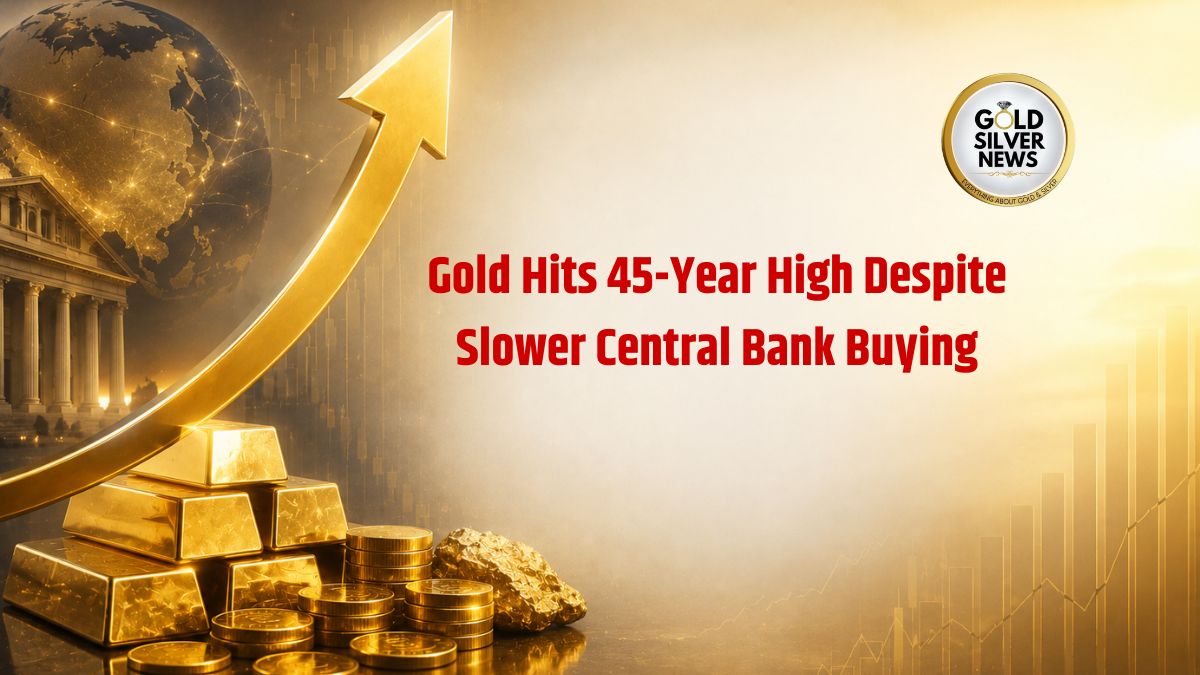
Despite a noticeable deceleration in buying velocity from global central banks, the gold market staged a historic rally in 2025, surging 44% to hit a 45-year high of 4,550 dollar per ounce. A definitive report from Metals Focus confirms that while official sector accumulation dropped roughly 20% compared to the unprecedented buying spree of the previous three years, institutional demand remained significantly above historical norms. This robust backdrop, coupled with severe geopolitical instability and systemic inflation fears, drove bullion to log an astonishing 56 fresh record highs over the course of the year.
Central Bank Demand Slips but Comfortably Anchors the Floor
A primary driver of the 2025 bullion rally was the structural pivot away from the U.S. dollar by global monetary authorities. Even though the aggregate volume of central bank purchases cooled, the sustained demand acted as a powerful psychological and financial cushion for the asset.
- Leading Official Buyers: The central banks of Poland—which single-handedly accumulated 102 tonnes—alongside heavyweights China and Brazil, remained the most aggressive in expanding their gold allocations.
- Above Historical Norms: Even with net central bank buying tracking a fifth lower year-on-year, the ongoing institutional de-dollarization trend kept demand far higher than decades-long averages.
Supply-Demand Mismatch
The record-breaking price action of 2025 reshaped the traditional dynamics of the physical gold market, sparking a deep divergence between retail investment and commercial luxury sectors.
Record Mining Output: Global gold mining production expanded by 2% year-on-year to touch a fresh historic high of 3,817 tonnes, propelled by major new mine commissions and project expansions across Africa, Canada, and South America.
Restrained Recycling: Despite sky-high valuations, scrap and recycling volumes saw a mere 2.8% uptick to 1,404 tonnes. Consumers globally preferred to retain their physical gold rather than cash in, viewing it as the ultimate financial safety net amid broader economic volatility.
Demand Metrics
Jewellery Slump: Squeezed by unaffordable prices, global consumer jewellery demand plummeted. Most notably, Chinese jewellery demand crashed by 28% as buyers either retreated from the market or traded down to lower-carat products and cheaper alternative metals like platinum.
12-Year High in Physical Investment: Conversely, retail and institutional appetite for physical investment bars and coins skyrocketed by 16% to 1,400 tonnes. This regional boom was heavily concentrated in East and South Asia, with Indian retail gold investment leaping 17% as local investors fled underperforming domestic equity markets.
The Warsh Nomination and The Iran War Dynamic
The explosive momentum of 2025 spilled directly into the first month of 2026, forcing gold prices to a staggering all-time high of 5,595 dollar per ounce in late January. However, the market has since run into a series of macroeconomic roadblocks.
The Fed Pivot & Institutional Frustration: The momentum abruptly broke in March 2026 following the nomination of hawkish Federal Reserve Chair Kevin Warsh. His selection significantly eased market concerns regarding central bank independence, pushing yields higher. Concurrently, professional hedge funds and institutional players have expressed growing frustration over gold’s recent underperformance and range-bound consolidation during the height of the Iran war.
FAQ’s
1. Why did gold prices rise sharply in 2025 despite slower central bank buying?
Although central bank gold purchases declined by around 20% from recent record levels, demand remained well above historical averages. Combined with geopolitical tensions, inflation fears, and strong investor interest in safe-haven assets, these factors helped gold surge 44% during 2025.
2. Which countries were the largest central bank buyers of gold?
Poland was the most aggressive buyer, adding 102 tonnes of gold reserves. China and Brazil also remained among the leading purchasers as central banks continued diversifying reserves away from the U.S. dollar.
3. How did gold demand differ between investors and jewelry consumers?
While jewelry demand weakened due to record-high prices, investment demand strengthened significantly. Global purchases of gold bars and coins rose 16% to a 12-year high, with particularly strong growth in India and other Asian markets.
4. What happened to global gold supply in 2025?
Global mine production increased 2% year-over-year to a record 3,817 tonnes. However, gold recycling rose only modestly, as many investors chose to hold onto their gold rather than sell despite historically high prices.
5. Why did gold’s rally slow down in 2026?
After reaching an all-time high of 5,595 Dollar per ounce in January 2026, gold faced pressure from rising bond yields, shifting Federal Reserve expectations, and the nomination of Federal Reserve Chair Kevin Warsh. These developments reduced bullish momentum and contributed to a period of price consolidation.
Gold Price Today Digital Media Network
Facebook Page (129K Followers)- https://www.facebook.com/Goldsilverpricetoday
Facebook group of (80K Jewellers Member – Sunar Jewellers Ekta – https://www.facebook.com/groups/goldsilverpricenews
Website (100000 Users)- https://ohq.plp.mybluehostin.me/
Instagram (51K Followers)- https://www.instagram.com/goldpricetodaynews/
X- https://twitter.com/today_gold
Telegram Group (2000 Members)- https://telegram.me/goldsilverprice
Magazine (20000 Digital Subscribers): Gold Silver News For Magazine Subscription Contact +919111435279
Whatsapp News(25000 Members): +918448469588