



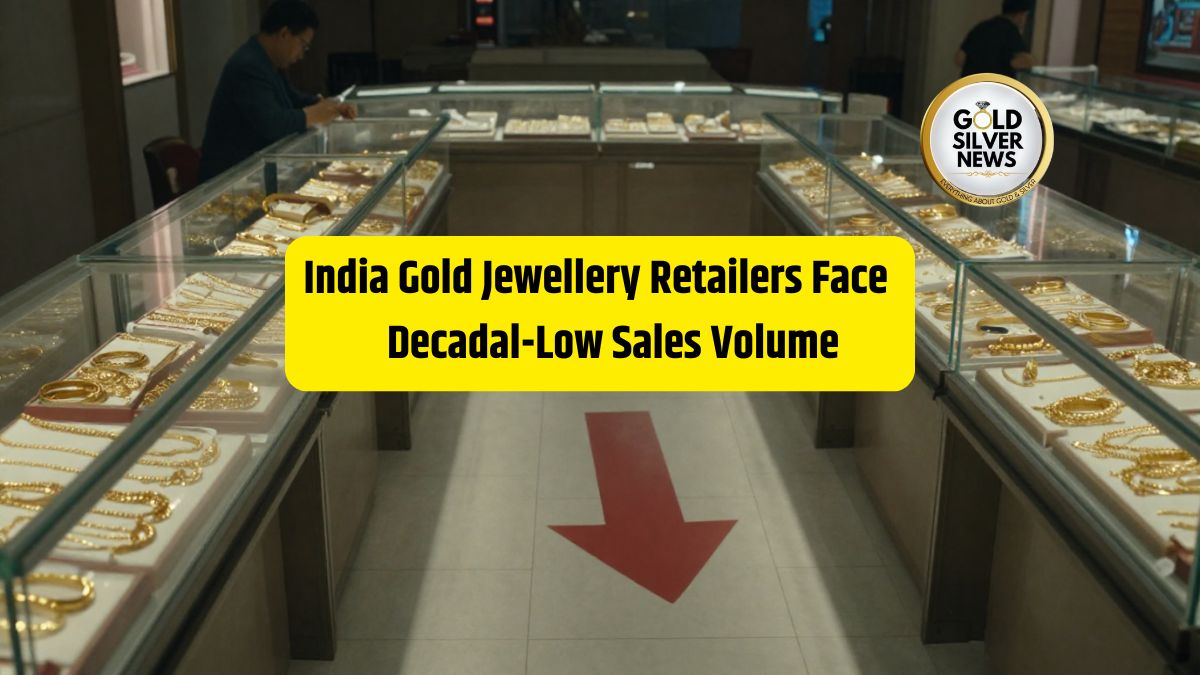
Crisil Report: India’s organised gold jewellery retail sector is bracing for a stark operational shift, navigating a decade-low contraction in consumer demand even as soaring prices keep corporate balance sheets afloat. According to a comprehensive industry analysis by Crisil Ratings, the sector—encompassing jewellery, coins, and bars—is projected to see sales volumes plunge a further 13-15% on-year this fiscal, compounding an 8% contraction witnessed last fiscal.
This sharp decline is directly attributed to unprecedented domestic gold prices and aggressive central policy interventions designed to curb imports. Yet, despite this severe drop in volume, the sector is poised to log robust revenue growth of 20-25% on-year, as drastically higher realisations artificially bolster top-line performance and insulate corporate credit profiles from structural deterioration.
Duty Hikes and Deficits: Curbing the Import Inflow
The primary catalyst behind the current demand shock is a aggressive regulatory pivot from New Delhi. In fiscal 2026, India imported approximately 720 tonnes of gold, triggering a massive foreign currency outflow of around USD 72 billion. To rein in a widening trade deficit and defend the domestic currency against geopolitical headwinds, the central government recently more than doubled the customs duty on gold, raising it from 6% to 15%.
While the policy successfully targets import reduction, it has fundamentally altered the consumer landscape. Excluding the pandemic-disrupted fiscal 2021, retail sales volumes are tracking toward their lowest levels in ten years, shrinking to an estimated 620-640 tonnes.
The Price Surge and the Affordability Pivot
Domestic gold prices soared by an unprecedented ~55% last fiscal, driven by global macroeconomic uncertainties and a depreciating Indian Rupee against the US Dollar. Trading at approximately Rs 1,60,000 per 10 grams (24 carat), the pricing environment has severely damaged consumer affordability.
This environment has triggered distinct structural shifts across retail showrooms:
- Down-Caratting: Consumers are actively migrating away from traditional 24-carat allocations, preferring lightweight, lower-carat options (16-22 carat range) and studded jewellery.
- Investment Migration: Pure investment demand has decoupled from wearable luxury. Over the past two fiscals, traditional jewellery sales plummeted by roughly 25%, while the acquisition of gold bars and coins surged by over 50%.
Operational Constraints vs. Stable Credit Profiles
For retail operators, the pricing paradigm is a double-edged sword. High spot prices have escalated inventory holding costs, forcing longer stock cycles of 160-180 days (up from 150 days last fiscal) and driving a one-third increase in bank borrowings to sustain operations. Gross margins are also facing pressure, as retailers deploy deep promotional discounts to clear inventory and absorb the lower value-added margins typical of gold coin and bar trading.
However, absolute profitability metrics remain remarkably resilient.
“While we see a notable shift towards gold bars and coins driven by investment demand, that is unlikely to fully offset the decline in overall demand,” stated Himank Sharma, Director at Crisil Ratings. “However, at the current price levels, realisations will be 35-40% higher on-year this fiscal, thereby improving cash accruals.”
Consequently, absolute earnings before interest, taxes, depreciation, and amortisation (EBITDA) are expected to improve by 20% on-year. This earnings buffer will successfully absorb the higher debt servicing costs.
Furthermore, retailers are executing defensive expansion plays. “Organised retailers are expanding cautiously through franchise-led models, which is improving capital efficiency and widening their reach into Tier 2 and 3 cities,” added Gaurav Arora, Associate Director at Crisil Ratings.
As a result, leverage ratios will remain strictly controlled. The industry’s total outside liabilities-to-adjusted net worth ratio is expected to peak at a manageable 1.5 times by March 31, 2027, up slightly from 1.2 times in March 2026. Backed by steady cash flows, median interest coverage will moderate to a still-healthy 5-6 times, ensuring that despite a decadal drop in consumer transactions, the financial architecture of India’s gold titans remains secure.
FAQ’s
1. Why is India’s gold jewellery demand declining according to Crisil?
Crisil stated that exceptionally high domestic gold prices and the government’s sharp increase in import duties have reduced consumer affordability. As a result, overall jewellery demand is expected to decline significantly this fiscal year, with consumers becoming more cautious about discretionary gold purchases.
2. How much has gold demand fallen in the organised retail sector?
The report estimates that organised gold jewellery sales volumes could decline by 13-15% this fiscal year, following an 8% contraction in the previous fiscal. Excluding the pandemic period, this would mark the weakest demand environment for the industry in nearly a decade.
3. Why are jewellery companies still expected to report strong revenue growth?
Despite weaker sales volumes, gold prices have surged sharply, increasing the value of every transaction. Crisil expects sector revenues to rise by 20-25% because higher realizations from elevated gold prices are compensating for lower physical demand and supporting overall earnings growth.
4. What major changes are being seen in consumer buying behaviour?
Consumers are increasingly shifting toward lightweight and lower-carat jewellery, including 16-22 carat designs, due to affordability concerns. At the same time, investment-focused demand for gold bars and coins has risen strongly, while traditional jewellery purchases have weakened considerably over the past two years.
5. How are organised jewellers managing financial pressure and expansion plans?
Retailers are cautiously expanding through franchise-led business models to improve capital efficiency and strengthen their presence in Tier 2 and Tier 3 cities. Although inventory costs and borrowings have increased, Crisil believes the sector’s cash flows, profitability, and debt servicing capabilities remain financially stable.
Gold Price Today Digital Media Network
Facebook Page (129K Followers)- https://www.facebook.com/Goldsilverpricetoday
Facebook group of (80K Jewellers Member – Sunar Jewellers Ekta – https://www.facebook.com/groups/goldsilverpricenews
Website (100000 Users)- https://ohq.plp.mybluehostin.me/
Instagram (51K Followers)- https://www.instagram.com/goldpricetodaynews/
X- https://twitter.com/today_gold
Telegram Group (2000 Members)- https://telegram.me/goldsilverprice
Magazine (20000 Digital Subscribers): Gold Silver News For Magazine Subscription Contact +919111435279
Whatsapp News(25000 Members): +918448469588