



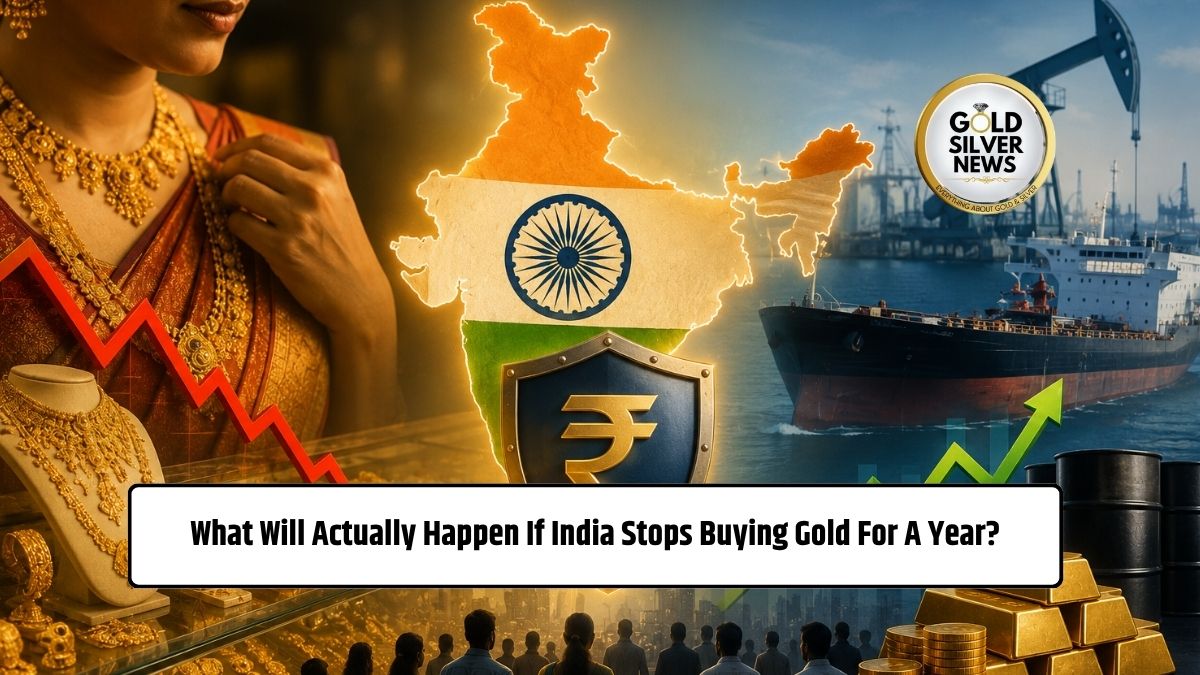
Gold Purchase: In a bold move to fortify the nation’s financial frontiers, Prime Minister Narendra Modi has issued a strategic appeal to Indian citizens to postpone non-essential gold purchases. This initiative has sparked an urgent debate among policymakers and households alike regarding what happens to the Indian economy if citizens stop buying gold for a year. As the world’s second-largest consumer of the precious metal, India’s “gold obsession” is now being weighed against the necessity for macroeconomic stability. Amidst escalating energy costs and geopolitical volatility in West Asia, the central theme of this appeal is clear: reducing the massive dollar outflow required for gold imports is critical to stabilizing the Rupee, narrowing the Current Account Deficit (CAD), and ensuring long-term fiscal resilience.
How Could It Impact the Indian Economy?
The government’s appeal is being viewed as a strategic step to protect India’s economy during a period of global uncertainty. The primary objective is to control the Current Account Deficit (CAD) and reduce pressure on the Indian rupee.
After crude oil, gold is one of India’s largest imports. When gold imports rise sharply, the country needs more US dollars to pay for those purchases, increasing pressure on foreign exchange reserves and weakening the rupee.
Saving Dollars for Essential Imports
Experts believe that if gold purchases decline, India could save billions of dollars in foreign exchange. These savings could then be redirected toward essential imports such as crude oil, whose prices have surged due to the ongoing West Asia crisis.
Lower demand for imported gold would reduce the need to exchange rupees for dollars in global markets. This could help stabilize the rupee and ease pressure on India’s overall trade balance.
Market Volatility and Mass Job Loss Loom for Jewelry Sector
A proposed one-year freeze on gold purchases threatens to destabilize India’s massive gems and jewelry sector, sparking fears of a localized economic crisis and a surge in illicit trade.
As one of the nation’s largest employment engines, the industry currently supports over 10 million (1 crore) workers. Analysts warn that a total halt in domestic buying would not only trigger widespread unemployment but also fundamentally alter the country’s financial landscape.
Stock Market Turbulence and Economic Fallout
The immediate reaction to the proposal has been felt on Dalal Street. Major jewelry stocks witnessed significant selling pressure as investors braced for a year of zero revenue growth.
The economic distress is expected to hit hardest at the grassroots level, affecting:
- Artisans and Goldsmiths: Small-scale craftsmen who rely on daily turnover.
- Retail Chains: Large franchises facing massive overheads with no sales.
- Ancillary Services: Logistics, security, and packaging firms tied to the gold trade.
Historical data suggests that when legal channels are restricted, demand rarely evaporates—it simply goes underground. Experts caution that because gold is deeply woven into India’s cultural fabric (particularly for weddings and religious festivals), a freeze would likely catalyze a spike in smuggling.
RBI Reserves vs. Retail Restrictions
The proposal highlights a striking contrast in national policy. While citizens are being urged to stop physical purchases, the Reserve Bank of India (RBI) continues to strengthen its position, currently holding a record 880 tonnes of gold to ensure national financial stability.
The Shift to “Paper Gold”
In a move to balance economic stability with consumer demand, the government is aggressively pivoting toward digital alternatives. To mitigate the impact of physical import costs on the current account deficit, officials are promoting:
- Sovereign Gold Bonds (SGBs): Government-backed securities denominated in grams of gold.
- Gold ETFs: Exchange-traded funds that track the domestic price of physical gold.
While these instruments offer a hedge against inflation, they offer little solace to the millions of laborers whose livelihoods depend on the physical handling and crafting of the precious metal.
How Could It Affect Global Gold Prices?
India is one of the world’s largest gold consumers, importing nearly 800 tonnes of gold every year. If Indian demand slows significantly, the global gold market could witness a major shift in supply and demand dynamics.
A sharp decline in Indian buying could create excess supply in international markets. With fewer buyers absorbing global inventories, spot gold prices may come under pressure and could see a noticeable correction.
Domestic Prices in India May Still Stay High
Interestingly, even if international gold prices decline, prices within India may not fall at the same pace. Lower imports and tight local supply could create artificial scarcity in the domestic market, leading to higher premiums. Analysts note that these premiums have already crossed 20 dollar per ounce in some cases.
FAQ’s
1. Why has PM Modi appealed to Indians to avoid buying gold for a year?
The appeal aims to reduce India’s massive gold import bill, save foreign exchange reserves, support the rupee, and control the Current Account Deficit (CAD) during a period of high crude oil prices and global economic uncertainty.
2. How can reduced gold buying help the Indian economy?
Lower gold imports would reduce the demand for US dollars, helping stabilize the rupee and preserve forex reserves. The saved foreign exchange could be used for essential imports such as crude oil and energy-related products.
3. What impact could this have on India’s jewellery industry?
Experts warn that a prolonged decline in gold demand could severely affect India’s gems and jewellery sector, which supports more than 10 million jobs. Artisans, retailers, logistics firms and goldsmiths may face financial stress and reduced business activity.
4. Could stopping gold purchases affect global gold prices?
Yes. India imports nearly 800 tonnes of gold annually and is one of the world’s largest consumers. A major drop in Indian demand could create excess supply in international markets, putting downward pressure on global gold prices.
5. What alternatives is the government promoting instead of physical gold?
The government is encouraging investors to shift toward “paper gold” options such as Sovereign Gold Bonds (SGBs) and Gold ETFs. These instruments allow investors to benefit from gold prices without increasing physical gold imports.
Gold Price Today Digital Media Network
Facebook Page (100K Followers)- https://www.facebook.com/Goldsilverpricetoday
Facebook group of (80K Jewellers Member – Sunar Jewellers Ekta – https://www.facebook.com/groups/goldsilverpricenews
Website (100000 Users)- https://ohq.plp.mybluehostin.me/
Instagram (46 K Followers)- https://www.instagram.com/goldpricetodaynews/
X- https://twitter.com/today_gold
Telegram Group (2000 Members)- https://telegram.me/goldsilverprice
Magazine (20000 Digital Subscribers): Gold Silver News For Magazine Subscription Contact +919111435279
Whatsapp News(25000 Members): +918448469588